
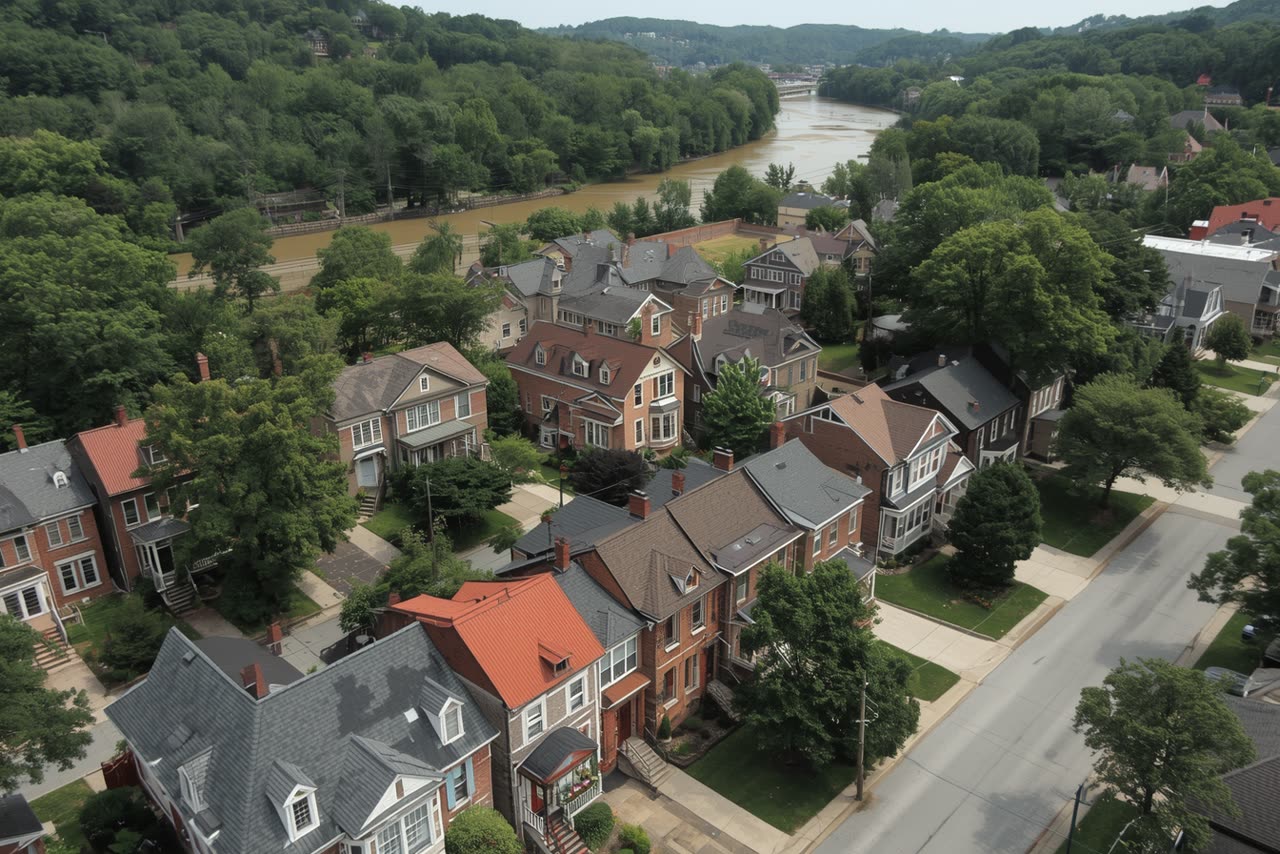
A storm just went through and you are wondering about the roof. Take a breath. Most of what matters in the first day is keeping people safe, stopping water and writing things down. Decisions about repairs, claims and contractors can wait until you have the facts. This guide covers storm damage to a roof in the Knoxville area in the order you will likely need it.
Why storms hit roofs here
East Tennessee gets wind, hail and the occasional tornado. NOAA's 1991 to 2020 normals put average rainfall at McGhee Tyson Airport near 52 inches a year. The National Weather Service office in Morristown has found that large hail in East Tennessee peaks in May, tornadoes peak in April with a smaller peak in November, and damaging wind becomes the main threat from June on, usually in the late afternoon.
Recent examples show the range. On August 7, 2023, an EF-2 tornado crossed western Knox County near Karns and damaged roofs in a subdivision, while straight-line winds of 60 to 90 mph hit other areas. On May 16, 2023, hail up to an inch fell north of Knoxville. On May 6, 2022, hail as large as golf ball to 2 inches fell in Loudon County, with damage reported in Lenoir City. Large hail of 2 inches or more is uncommon in Knox County itself, so wind and falling limbs are often the bigger roof threat. Sources: NWS Morristown and its event summaries.
Step 1: Safety first
- Stay off the roof. Wet shingles, loose debris and damaged decking make a fall easy. Look from the ground, with binoculars if you have them.
- Watch for downed power lines and keep everyone away, including from standing water near them. Call the utility.
- Check the attic if you can do it safely. Stains, drips or daylight through the roof boards point to a breach.
- Leave a sagging ceiling alone. Water held in drywall can fall without warning. If a ceiling bulges, keep everyone clear of it and call a professional about draining it safely.
- If a tree is on the house, stay out of the area under it and call for help. Do not cut it yourself.
If anyone is hurt or a roof has partly collapsed, call 911.
Step 2: Photograph everything before you touch anything
Take photos and video of every sign of damage before you move or clean up anything: the roof from the ground, fallen limbs, dented gutters and downspouts, damaged siding, soft metal vents, ceiling stains, wet insulation and water on floors. Date matters, so keep the originals on your phone. Include wide shots and close ups.
Start a simple log of every call you make about the damage, with the name, number, date and what was said. The Tennessee Department of Commerce and Insurance (TDCI) recommends keeping this kind of record.
Step 3: Stop more damage with temporary protection
A policy usually expects you to protect the property from further harm. TDCI advises making temporary repairs, such as tarping a leaking roof, and holding off on permanent repairs until the insurer has inspected. A few notes:
- Keep receipts for tarps, plywood and any emergency help. Ask your insurer whether those costs are reimbursed.
- Cover the exposed area from the ridge down, overlap the edges and secure the tarp to the roof structure with boards, not just weights. Tarping a steep wet roof is dangerous, and many homeowners hire this out.
- Move valuables away from drips and set out buckets.
See emergency roof repair for what a temporary fix looks like, and roof leak repair for finding the source later.
Step 4: Call your insurance company
Report the claim promptly. Your policy may set a deadline for notice, and Tennessee has no single state number of days, so read your policy. Ask:
- What is my deductible for wind and hail? Some policies use a separate, percentage deductible for storms.
- Is the roof covered at replacement cost or at actual cash value (which subtracts age)?
- When will an adjuster inspect, and can I be there?
- How long do I have to file a suit if there is a dispute? Policies often shorten the time to sue. Check your policy's wording.
Write down the claim number and keep it handy. TDCI answers insurance questions at 615-741-2218 or 1-800-342-4029.
Step 5: Get a roof check
A roof check is a close look at shingles, flashing, vents, gutters and decking by someone who works on roofs. Hail leaves bruises, cracked shingles and granule loss that are hard to see from the yard. Wind lifts and creases shingle tabs, tears off ridge caps and pulls flashing loose. A roof can look fine from the street and still be damaged.
Get the check from a roofer you chose and looked up, not one who knocked on the door. You can call the number at the top of this page to reach an independent local roofing company about storm damage roof repair. Ask for photos of what they find. A written report is useful for the claim.
Step 6: Know Tennessee's roofing contract rules
Tennessee has a law on residential roofing services after insurance claims, in Tennessee Code Title 62, Chapter 6, Part 6 (sections 62-6-601 to 606). This is a plain summary from public legal summaries of those sections, not legal advice, and you should read the current statute or ask a lawyer about your own contract. In short:
- Cancel window. If your insurer tells you in writing that all or part of the claim is not a covered loss, you can generally cancel a residential roofing contract by written notice before midnight of the third business day after you get that notice.
- Required disclosures. Before you sign, the roofer must give written information, including the cancellation address and phone number, license numbers, a detailed description of the damage and repairs, a bold cancellation statement and a detachable "Notice of Cancellation" form.
- Payment timing. A roofer cannot require payment until your insurer confirms coverage in writing or the three-day cancel window has passed. Refunds after a cancellation are due within ten business days, except for emergency repairs you acknowledged in writing. Roofers cannot falsely claim an emergency.
- No acting as your adjuster. A roofer may not act or hold out as a public adjuster unless authorized under Tennessee insurance law.
- Enforcement. A violation is treated as an unfair or deceptive trade practice under the Tennessee Consumer Protection Act.
Other state guidance: do not pay cash, do not pay in full up front, never sign over your insurance check, and expect a deposit of no more than one-third. If a roofer needs money for materials, ask to pay the supplier directly.
Step 7: Be careful with door knockers
Storms bring out roofers who travel to wherever the damage is. Some are honest. Some take a deposit and disappear. State consumer officials list door-to-door sellers, pressure to sign right away and a request that the homeowner pull the permit as red flags. Some practical habits:
- Do not sign anything on the spot, and do not let anyone on the roof "just to look" without ID.
- Ask for a license number, then check it yourself (below).
- Ask for proof of insurance and call the carrier.
- Ask for three local references and call them.
- Get everything in writing. If the contract does not match what you were told, do not sign.
TDCI also notes that failing to perform work within 90 days after taking payment can be a crime under state theft law.
Step 8: Check the contractor
Tennessee requires a state contractor license for jobs of $25,000 or more, and roofing falls under the BC-21 classification. Smaller jobs are covered by local rules. Check any roofer on the state lookup at verify.tn.gov or call the Board for Licensing Contractors at (800) 544-7693 or (615) 741-8307. Knox County also requires a Home Improvement license for jobs from $3,000 up to $24,999. Details and links are in the permits and licenses guide.
Step 9: Decide, in writing
Get at least two or three written estimates. Compare scope, materials, permit handling, who disposes of debris, warranty terms and payment schedule. The cost guide shows what a fair estimate lists. Do not rush, and do not let an adjuster's number or a roofer's pitch set the plan until you have seen the findings from a roof check.