
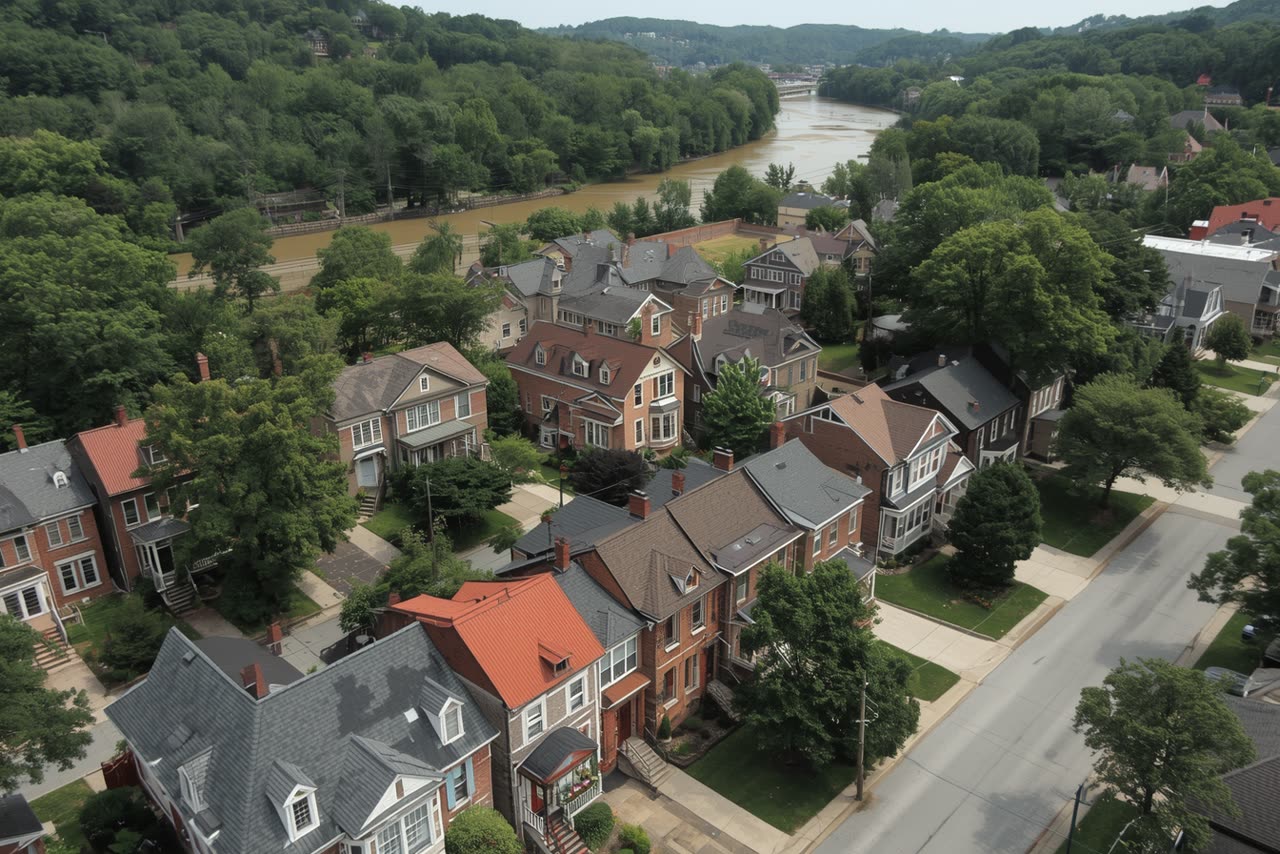
Alcoa is a small city in Blount County with 12,222 residents in the Census count, and Sequoyah Roofing connects Alcoa homeowners with an independent local roofing company for roof repair and replacement. It sits right beside Maryville, but it is its own city, so a few details about your roof depend on which side of the line you live on.
A median home built in 1980
According to Census figures, the median Alcoa home was built in 1980. A house that old has usually seen its roof replaced at least once. If you bought it in the last decade, you may not know when, and the previous owner's paperwork is the first thing to ask for.
What an older first or second roof tends to show:
- Shingle edges that have thinned and curled, especially on the south and west slopes.
- Metal flashing around chimneys that has rusted through or pulled away from the brick.
- Rubber pipe collars that have cracked, letting water run down vent pipes.
- A ridge line that sags slightly, which can mean the decking underneath has been wet for a while.
Start with the roof repair page if the trouble is at one spot, and with the roof leak repair page if you are chasing a stain.
Which county rules apply
Alcoa is in Blount County. Under Tennessee rules, the Home Improvement license for $3,000 to $24,999 jobs is a county opt-in, and Blount is not among the counties the state lists. A state contractor license is still required for jobs of $25,000 or more, with roofing under the BC-21 classification. For smaller jobs, the local codes office is the one to ask about any license or permit requirement.
Before you hire, get a license number, proof of insurance and written terms for any warranty, then search the license on the state's lookup site. Three references and a deposit of a third or less are the state's own suggestions.
Permits: ask the local office
This site found no official statement from Alcoa on whether a reroof needs a permit, so phone the city's building or codes office and ask about your address. The same goes for what inspection follows. Tennessee cities and counties differ on this, and an answer from a neighbor in a different city does not carry over. After you hear back, ask your roofer who will pull the permit and write it into the contract.
More general information is in the permits and licenses guide.
Weather that matters here
The Weather Service's 1991 to 2020 normals for the Knoxville-area station at McGhee Tyson show about 52 inches of rain a year and 4.6 inches of snow. For a roof, steady rain finds weak flashing before it finds weak shingles. Wind and hail show up in the spring and again in November, according to the Weather Service's East Tennessee severe weather climatology, with most events peaking in late afternoon.
After any storm, check the storm damage guide for what to photograph and who to call. A roofer who offers to "handle your insurance claim" for you is a red flag, because Tennessee law bars roofers from acting as a public adjuster unless they hold that separate license.
Repair or replace
A short rule of thumb: repair when the damage is local and the rest of the roof is sound, and replace when problems show up across more than one slope or the shingles are shedding granules everywhere. A roofer should show you photos of what they found, not just describe it. See the roof replacement page for what a full job covers.
For the neighboring city and its own page, see Maryville.
Matching the fix to the roof
Alcoa homeowners usually call for one of three reasons: a stain appeared after rain, a storm took off shingles, or a home inspection flagged the roof before a sale. Each leads to a different first step.
- A stain after rain. Note where it is and how long it takes to show. A roofer will usually work upward from the stain to find the entry point, which is often flashing or a vent rather than the shingles overhead.
- Storm damage. Photograph first, tarp second, and call your insurer before any permanent repair.
- A pre-sale inspection note. Ask the inspector which specific item was flagged, then get a roofer's written opinion. Often a handful of repairs are enough to satisfy a buyer.
Whichever applies, keep every document. Quotes, photos and receipts all help later if a claim or a sale comes up.