
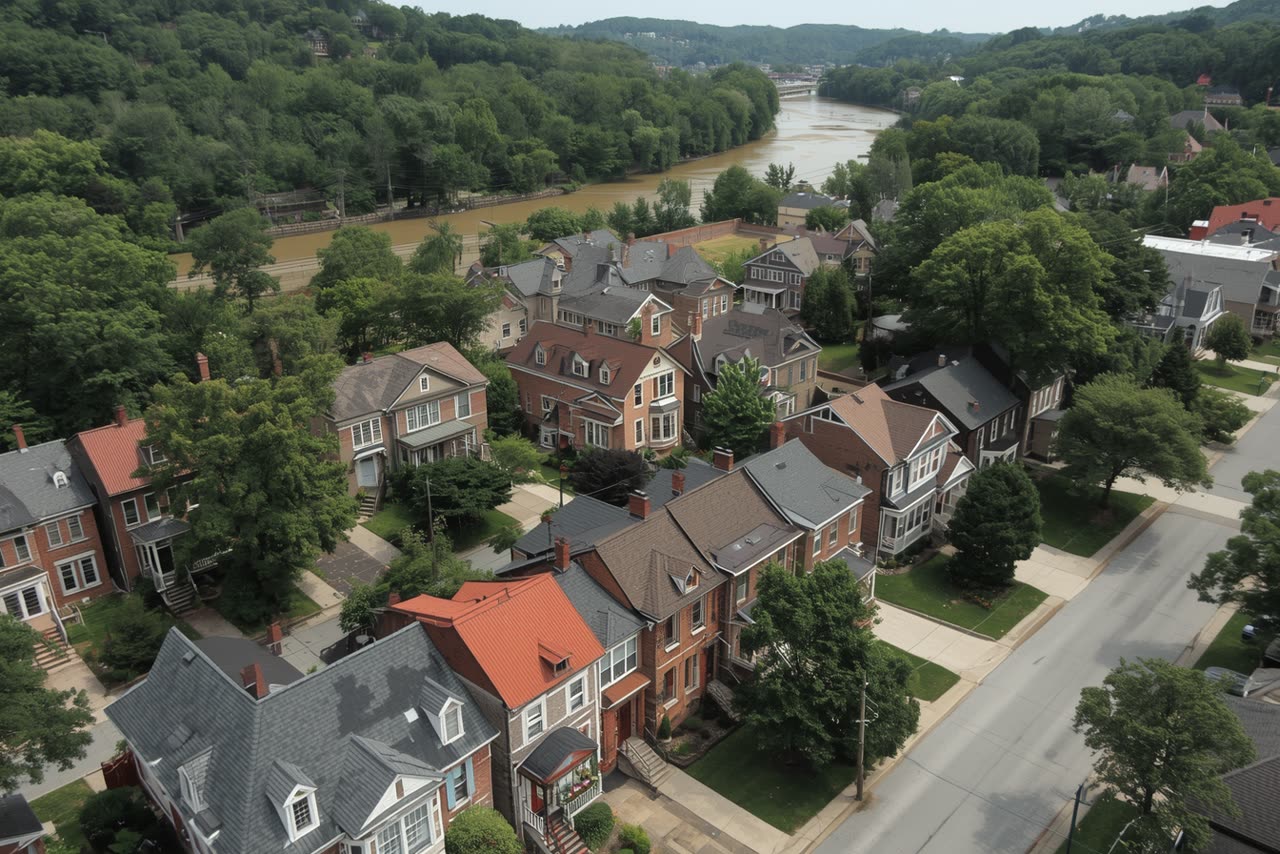
Clinton is a city of 10,239 people, according to the Census, on the northern side of the Knoxville metro. For roof repair in Clinton, Sequoyah Roofing connects homeowners with an independent local roofing company. Public pages for Clinton give little on roofing rules, so this page leans on what is verified and on general roofing guidance for houses of this age.
What a 1981 median says about roofs
The Census median build year for Clinton is 1981. Houses from that period are now more than forty years old, which is longer than any asphalt shingle roof is built to last without replacement. In practice that means most Clinton roofs you see are second or third roofs.
Where they tend to go wrong:
- Underlayment. The layer beneath the shingles can dry out and crack, and older roofs often had thin felt rather than modern synthetic sheets.
- Edges. Drip edge was not always installed on older homes, which leaves the wood at the eaves exposed to wicking water.
- Penetrations. A bathroom fan vent or old satellite mount can leave a hole that was never sealed properly.
- Attic airflow. Older ranches often have only a couple of gable vents, which does little to ventilate the whole attic.
If you suspect any of these, the roof repair page explains how a repair is scoped.
Permits and who to ask
This site found no official source for Clinton's reroof permit rules or code edition. The honest position is that it varies by city and county across Tennessee. Call the building office that serves your address and ask whether your job needs a permit, then settle in writing with the roofer who applies for it. Being asked to apply yourself is one of the warning signs the state lists.
A general overview is in the permits and licenses guide.
Licenses to check
The state requires a contractor license for projects of $25,000 or more, with roofing classified BC-21. Anderson County, which surrounds Clinton, is not among the counties the state lists for the smaller Home Improvement license. Even so, you can pull up a roofer's state record online, and you can ask for insurance paperwork and the terms of any warranty before you sign.
Wind more than hail
For East Tennessee generally, the National Weather Service's records show hail peaking in May and tornadoes in April, with damaging wind the dominant threat from June onward. No verified Clinton storm record was available for this page, so rather than listing events, here is the practical part: wind lifts shingle edges and snaps limbs, and a tree on a roof is a bigger problem than any single hailstone.
After a storm, tarp the damage if you can do it safely, photograph everything, and read the storm damage roof repair page. The state also advises you not to make permanent repairs before your insurer has looked.
Looking at costs
For scale only, a published regional study (Cost vs Value 2025) puts asphalt replacement near $25,939 and metal near $41,256 for a large standard job. Those are averages, not quotes. Real quotes depend on your roof's size, pitch and condition. The cost guide explains the range.
When to repair and when to replace
A short repair makes sense when the damage is limited to one slope, one flashing or a few shingles and the rest of the roof still lies flat and holds its granules. Replacement starts to make sense when granules collect in the gutters, tabs crack when lifted or leaks show up in more than one place.
For a house from the early 1980s, ask the roofer to check three specific things: the number of layers already on the roof, whether the decking has soft or dark patches, and whether the attic has enough vents. The roof replacement page describes what a full job includes, so you can compare quotes line by line.
Keep the old paperwork. If a previous owner left a receipt or a permit record, it tells you how old the roof really is.